Skip to content
Brake Theory

Brake Basics

The parts that stop you

From your foot to the wheel: how hydraulic pressure and friction slow a vehicle.
  1. 1

    You press the pedal

  2. 2

    Master cylinder builds pressure

  3. 3

    Fluid moves to calipers

  4. 4

    Pads clamp the rotor

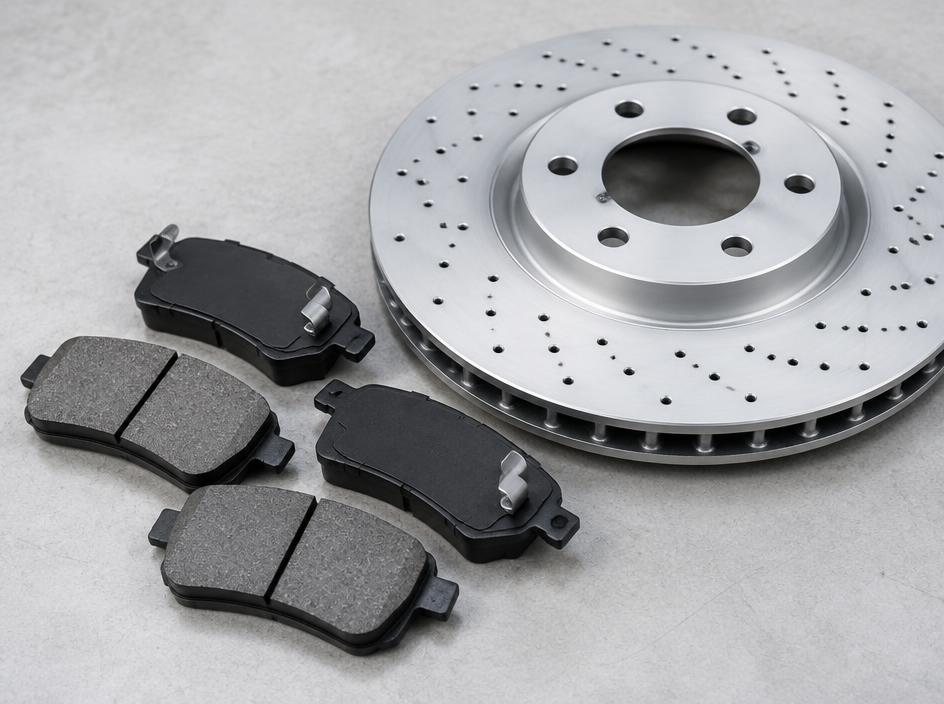
New brake pads beside a drilled brake rotor on a gray surface

Brake Pads and Rotors

Friction between pads and a spinning rotor turns motion into heat, which slows the wheel.

  • Pads are made of friction material bonded to a steel backing plate. Rotors are iron discs that spin with the wheel.
  • Both wear gradually. Many pads include a small metal tab that squeals when the friction material gets thin.
  • Rotors can develop grooves or uneven thickness over time, which may cause vibration while braking.
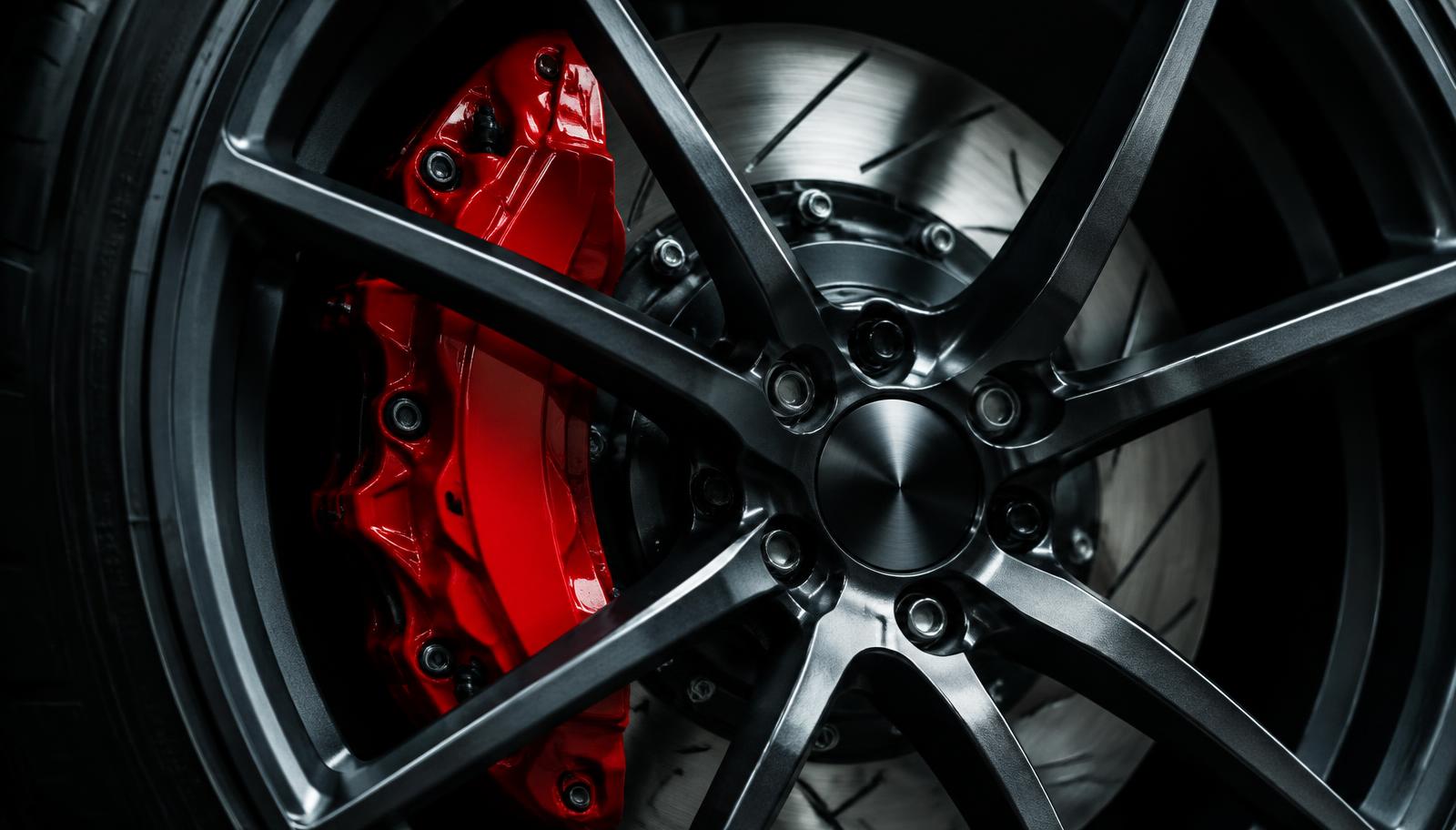
Red brake caliper mounted over a slotted rotor behind an alloy wheel

Brake Calipers

The caliper squeezes the pads against the rotor when hydraulic pressure arrives.

  • Floating calipers use pistons on one side and slide to clamp both pads. Fixed calipers have pistons on both sides.
  • Seized slide pins or pistons can make a vehicle pull to one side or cause uneven pad wear.
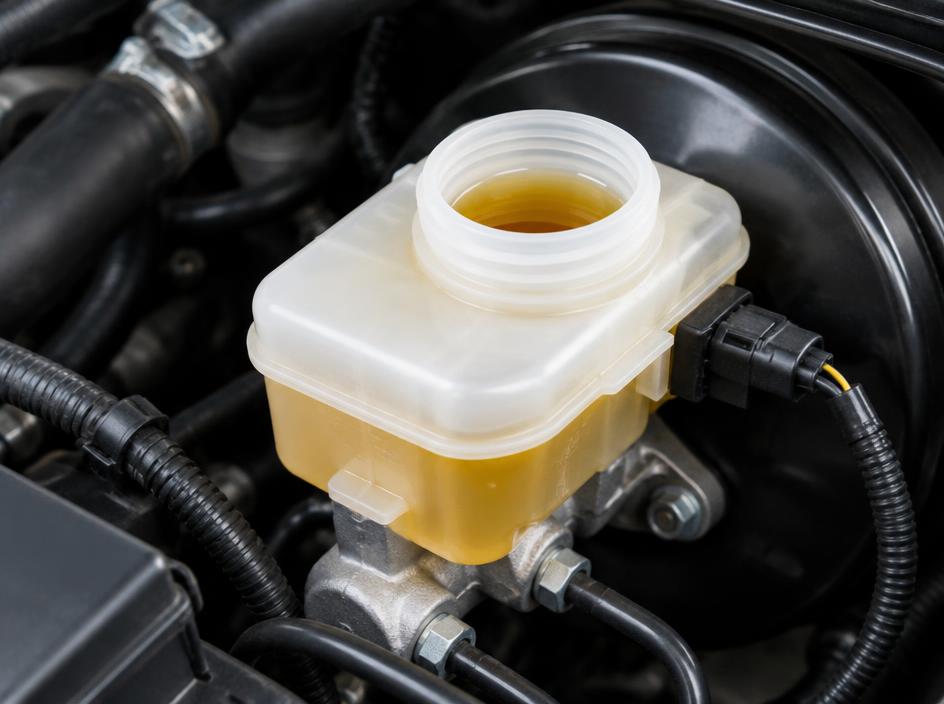
Brake fluid reservoir with amber fluid in an engine bay

Brake Fluid

Brake fluid carries the force from your foot to every wheel through sealed lines.

  • Fluid does not compress, so pedal force is transmitted almost instantly to the calipers.
  • Most brake fluids absorb moisture over time, which lowers their boiling point. Vehicle manuals list a recommended change interval.
  • A low reservoir level can point to worn pads or a leak and is worth having checked.
Get Brake Safety Tips