Skip to content
Brake Theory
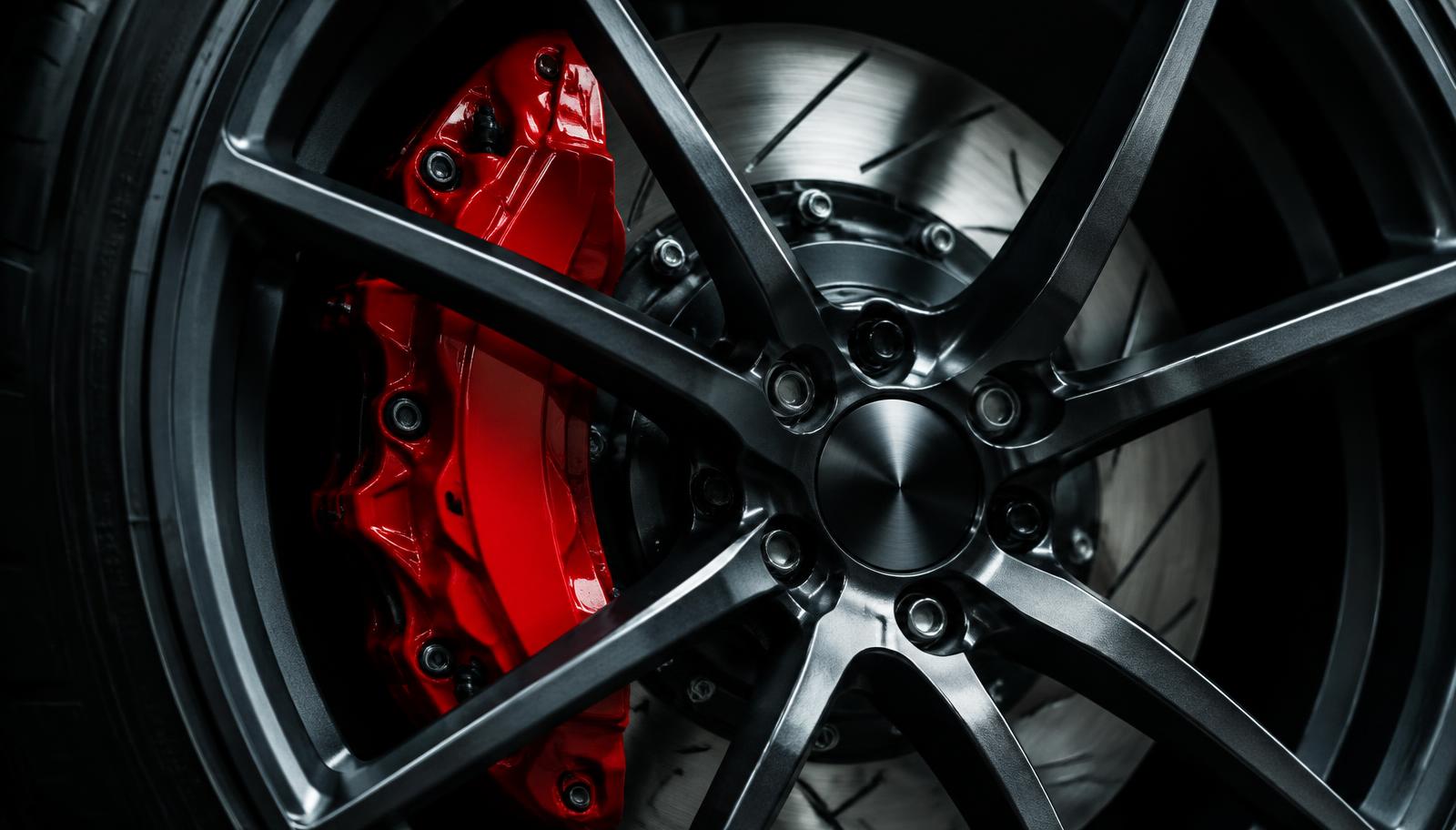
Red brake caliper on a slotted rotor behind a dark alloy wheel

Brake Systems Explained

Understand what stops your car

An educational resource explaining how vehicle braking systems work, common brake components, braking performance, and general braking safety.

Brake Theory

Seven core braking topics

Open any box to read a deeper explanation.

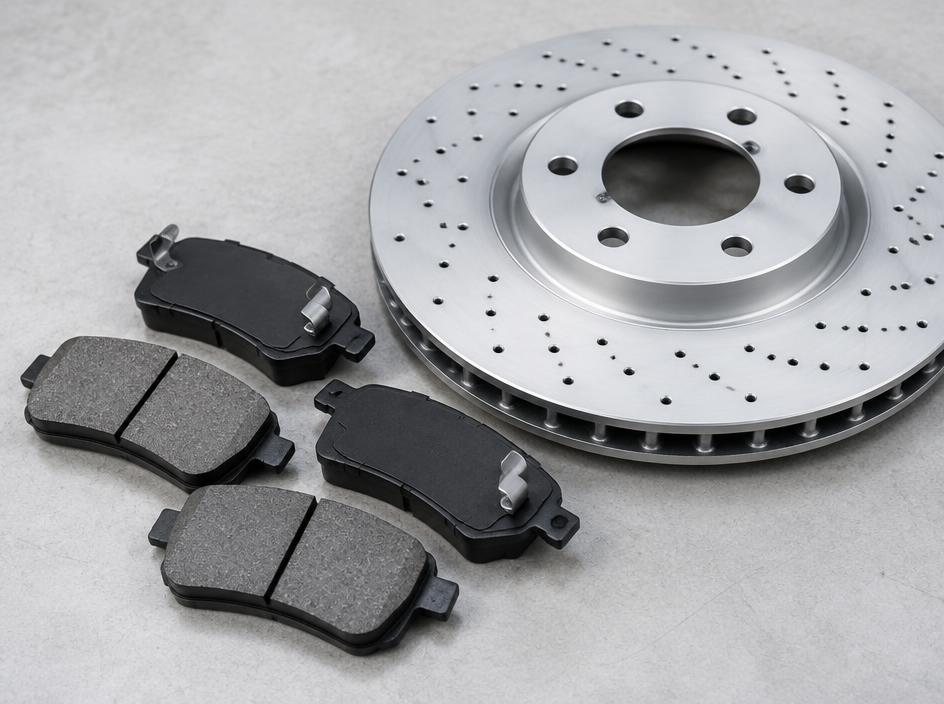
New brake pads beside a drilled brake rotor on a gray surface

Brake Pads and Rotors

Friction between pads and a spinning rotor turns motion into heat, which slows the wheel.

  • Pads are made of friction material bonded to a steel backing plate. Rotors are iron discs that spin with the wheel.
  • Both wear gradually. Many pads include a small metal tab that squeals when the friction material gets thin.
  • Rotors can develop grooves or uneven thickness over time, which may cause vibration while braking.
Red brake caliper mounted over a slotted rotor behind an alloy wheel

Brake Calipers

The caliper squeezes the pads against the rotor when hydraulic pressure arrives.

  • Floating calipers use pistons on one side and slide to clamp both pads. Fixed calipers have pistons on both sides.
  • Seized slide pins or pistons can make a vehicle pull to one side or cause uneven pad wear.
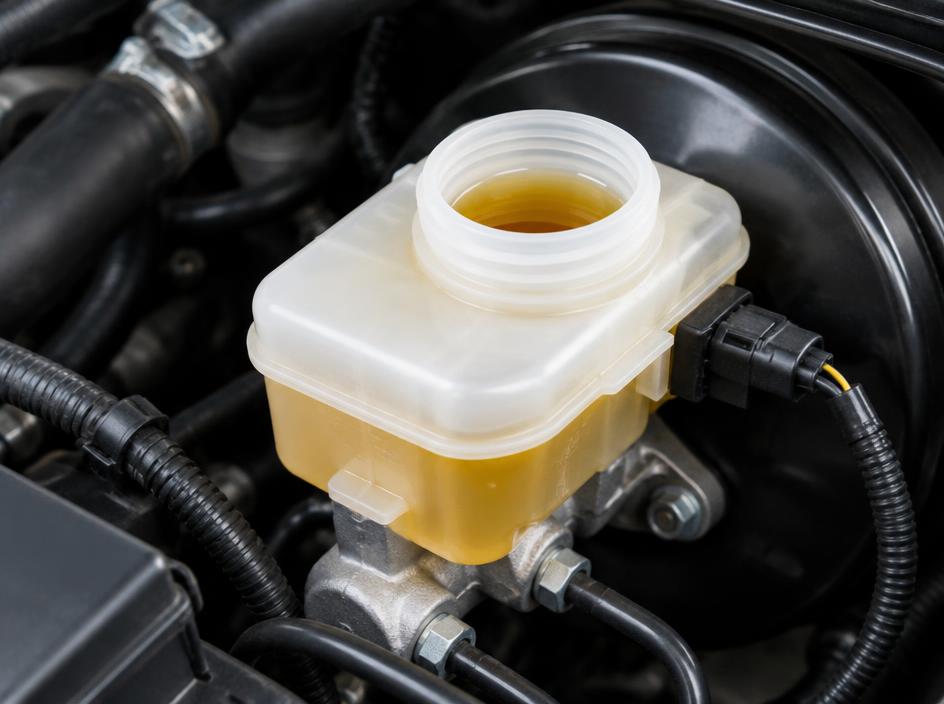
Brake fluid reservoir with amber fluid in an engine bay

Brake Fluid

Brake fluid carries the force from your foot to every wheel through sealed lines.

  • Fluid does not compress, so pedal force is transmitted almost instantly to the calipers.
  • Most brake fluids absorb moisture over time, which lowers their boiling point. Vehicle manuals list a recommended change interval.
  • A low reservoir level can point to worn pads or a leak and is worth having checked.
Close view of a brake rotor and caliper representing ABS controlled wheels

Anti-lock Braking Systems (ABS)

ABS rapidly modulates pressure to keep wheels from locking so you can still steer.

  • Wheel speed sensors watch each wheel. When one slows too quickly, a valve briefly releases and reapplies pressure.
  • In a hard stop you may feel pulsing in the pedal. That is normal. Keep firm, steady pressure and steer.
Car with headlights on approaching along a road

Stopping Distance

Total stopping distance is reaction distance plus braking distance.

  • Reaction distance is how far you travel before your foot reaches the pedal.
  • Braking distance grows roughly with the square of speed, so doubling speed can roughly quadruple braking distance.
  • Tire condition, road surface, load, and brake condition all affect the result.
Brake hydraulic components related to dashboard warning indicators

Brake Warning Indicators

Dashboard lights report parking brake status, low fluid, and ABS faults.

  • A red brake light can mean the parking brake is on or fluid is low. An amber ABS light means the anti-lock system has a fault.
  • Check your owner's manual for the meaning of each light on your specific vehicle.
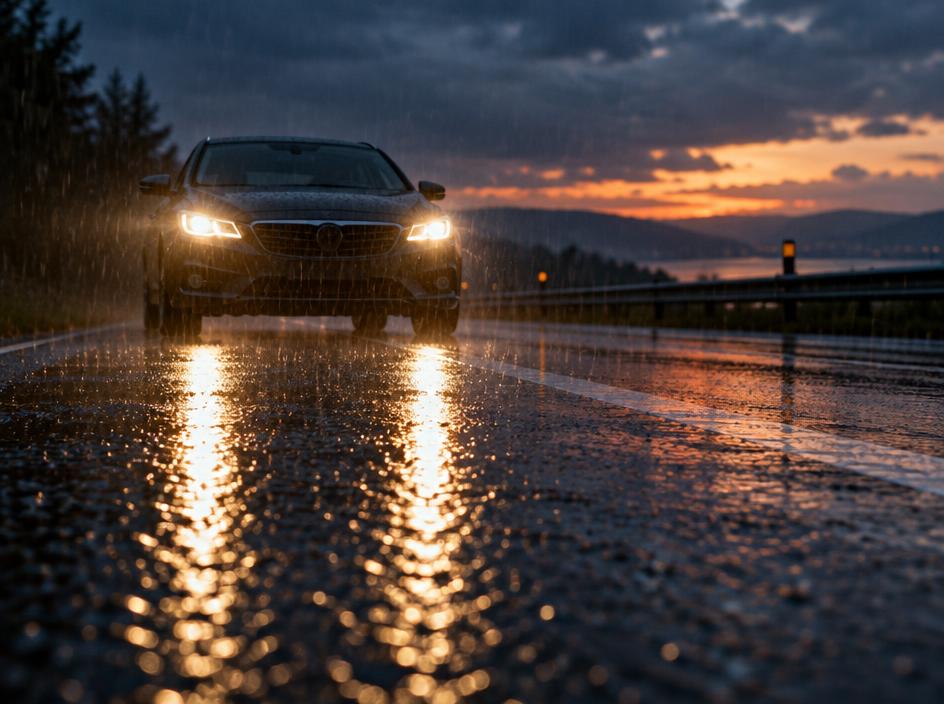
Wet road reflecting car headlights in the rain at dusk

Wet-Weather Braking

Water reduces tire grip, so stopping takes longer on wet roads.

  • Increase following distance and brake earlier and more gently.
  • Deep standing water can cause hydroplaning. Ease off the accelerator rather than braking hard.
  • After driving through deep water, light brake applications can help dry the pads and rotors.

What you will find here

  • Brake Component Guide

    Plain explanations of pads, rotors, calipers, fluid, and ABS.

  • Braking Safety Checklist

    A quick interactive check you can run before a trip.

  • Warning-Sign Reference

    What common sounds, feelings, and lights may indicate.

  • SMS Brake Tips

    Optional text reminders with practical braking safety tips.

Before you drive

Run a quick brake check

Tap each item as you check it. Anything that does not feel right is a reason to have the brakes inspected.

See the warning-sign reference

Braking Safety Checklist

0/7

Optional text tips

What you receive

The Brake System Education and Braking Safety Tips program sends brake system tips about brake components, warning signs, safe braking habits, and general maintenance awareness. Signing up is entirely optional. Everything on this website is available without it.

  • Text participation is optional, and you choose each message category.
  • Mobile opt-in information is never transferred for third-party marketing or lead generation.
  • Brake Theory is an information resource, not a repair shop or parts seller.

Required only if you choose a text message category below.

Opt-in Preferences

Account Notifications

Marketing

I have read and agreed to the Terms of Use and Privacy Policy.

By checking an SMS consent box, you authorize Brake Theory to send text messages to the phone number provided for the selected message category. Consent is optional and is not a condition of purchase, access, or use of this website. Message frequency varies unless otherwise stated. Msg & data rates may apply. Reply STOP to cancel or HELP for help. Mobile opt-in data and SMS consent will not be sold, shared, rented, or transferred to third parties for marketing or lead generation. See our Privacy Policy and SMS Terms of Service.

Reply STOP to cancel. Reply HELP for help.

Get Brake Safety Tips